
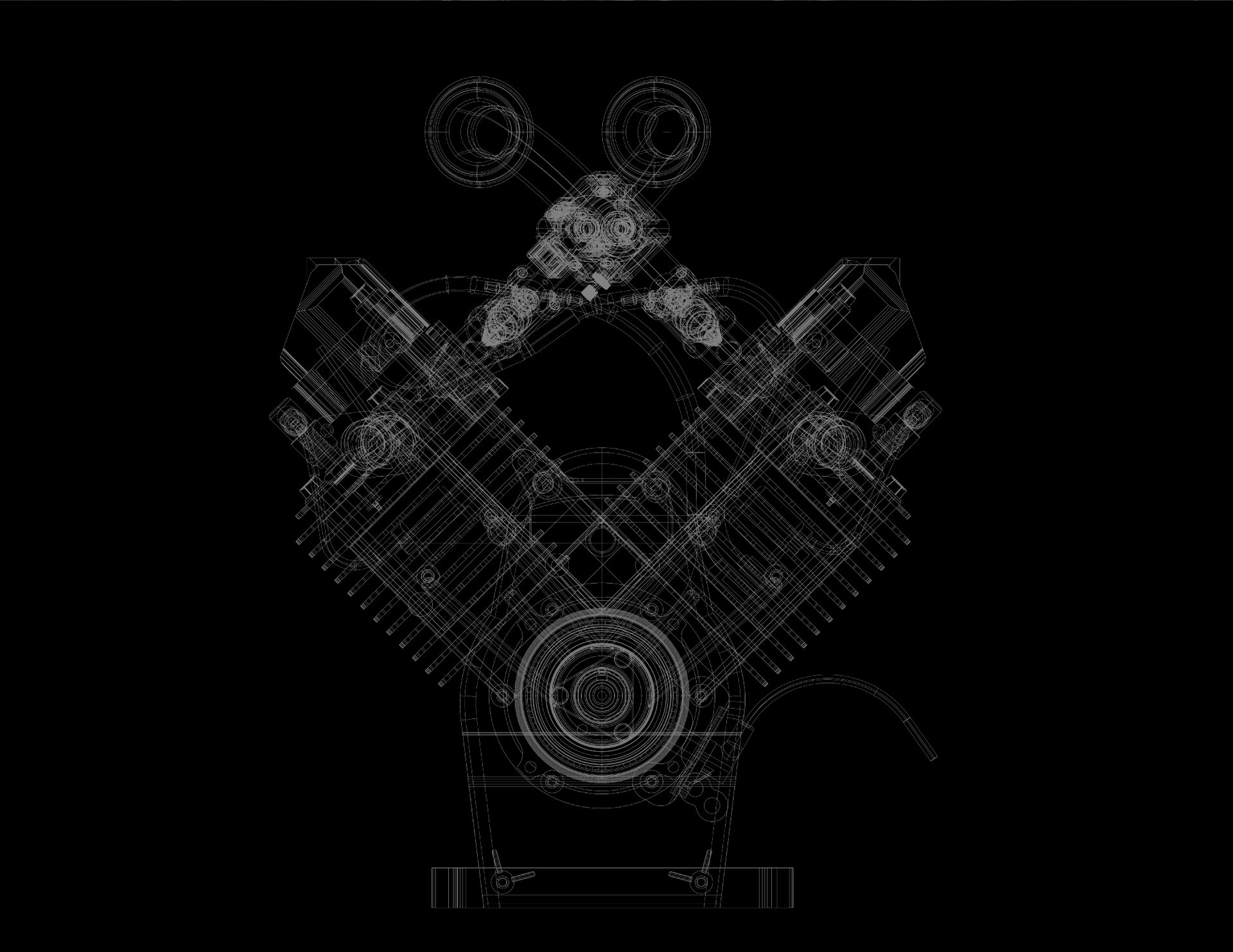
Our engine operates through a closed loop of water and steam. A boiler heats water to produce high-pressure steam. That steam drives a piston connected to a flywheel, converting thermal energy into rotational mechanical energy.
Steam Engine Architecture
After doing work, the steam is exhausted into a condenser, which cools it back into water. The water is then returned to the boiler to repeat the cycle.






Modular Design
Boiler Generates steam
Engine Converts steam to rotational energy
Condenser Recovers water and improves efficiency

Coil Geometry & Safety
Coiled tubes are stacked to maximize exposure to combustion gases.
Carefully calculated coil angles optimize heat transfer.
The water-tube layout reduces stored water volume compared to some traditional designs, improving safety characteristics.
Any tube ruptures or failures are designed to vent safely through the boiler’s exhaust path.
Fuel Agnosticism & Combustion
Octane rating is not critical in the same way as in ICEs.
The system can be adapted to burn carbon-free fuels in the future.
Emissions control can be handled with simpler catalytic solutions because of the combustion environment.
Combustion occurs in the boiler at or near standard atmospheric pressure and typical combustion temperatures, rather than under the high compression conditions seen inside ICE cylinders. Because the boiler only needs to generate heat, it can operate with a broad spectrum of fuels—diesel, petrol, various blends, or lower-refined fuels.


Control Systems &
Efficiency Path
Current design analysis: ~32% thermal efficiency.
With continued development, improved control, and refined geometries, the goal is to reach 40–43% thermal efficiency, comparable to state-of-the-art ICEs.
We plan to use onboard control systems to manage boiler conditions and valve timing in real time. By continuously adjusting how and when steam is admitted to the engine, we can optimize for different operating modes—high-load performance or economical operation, without redesigning the hardware.